
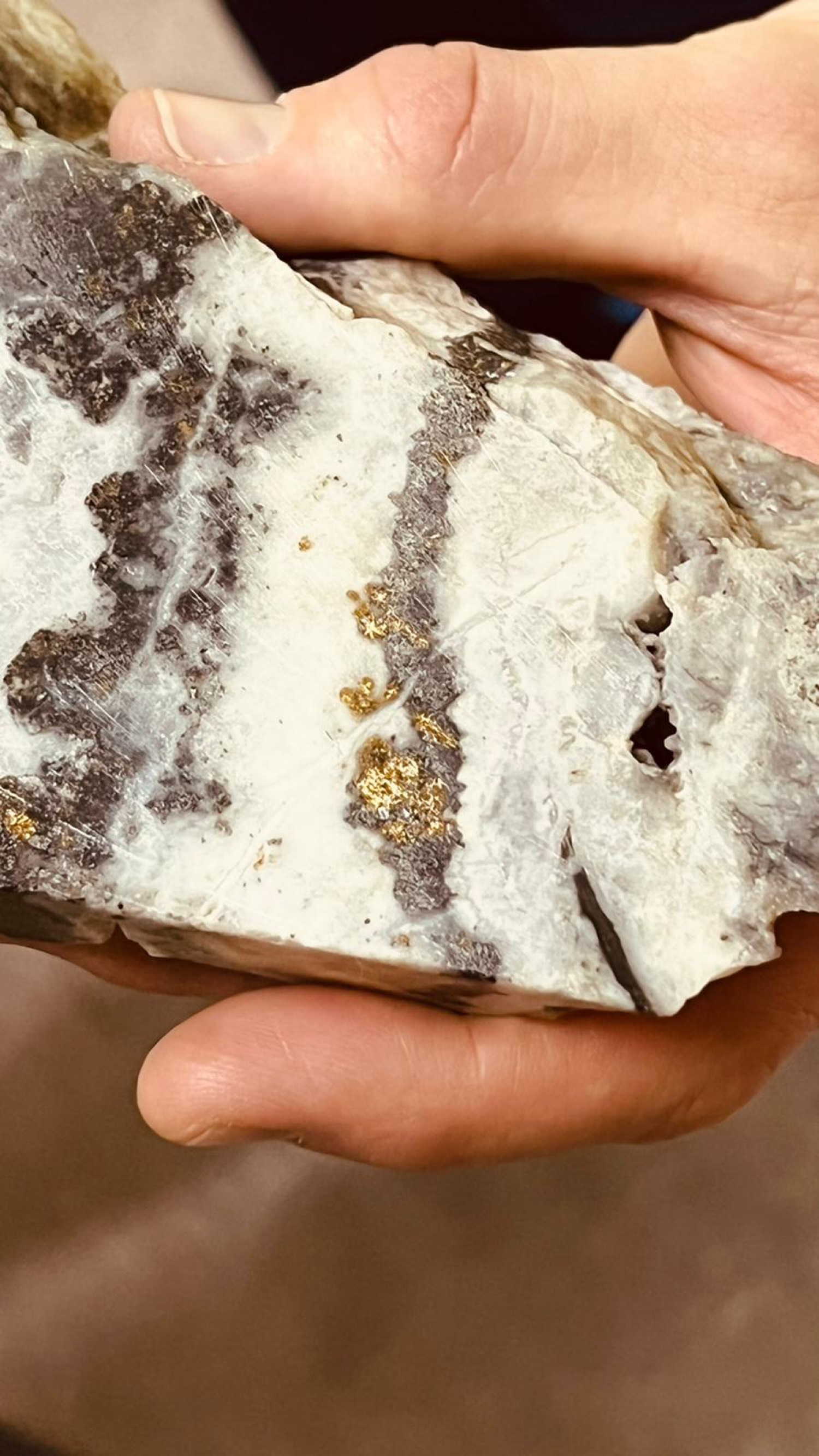
The fact first. Barton Gold ($BGD) (ASX:BGD) has closed an oversubscribed institutional placement, and it grew in the closing. Barton increased the placement from an initial A$25.5m to accommodate additional demand from North American investors, boosting total issued shares to 30.47 million priced at A$0.85 each — A$25.9m gross. The issue price represents a 3.4% discount to Barton's last traded price of A$0.88 and a 7.5% discount to the 10-day VWAP of A$0.919. The raising was supported by existing investors Franklin Templeton, Aegis Financial, IXIOS and MERK and closed significantly oversubscribed, with Canaccord Genuity (Australia) and MST Financial Services as lead managers.
Where the money goes is unusually specific for a junior. Barton confirmed it is now fully funded to complete a series of milestones at the Challenger gold project — mineral resource updates, conversion to ore reserves, and a definitive feasibility study to inform a final investment decision for a restart leveraging the Central Gawler Mill. The same proceeds fund a PFS and Mining Lease application at Tunkillia, plus infill drilling and metallurgical work at the high-grade Tolmer silver discovery. Management's framing: with more than A$30m cash at hand and its own strategic diesel reserve, Barton says it is well positioned to deliver project and shareholder value over the next 18 months.
The asset that matters isn't an orebody. It's a mill — the only permitted one in the district — and that is the cheapest ounce of optionality in South Australian gold.
The Take (conviction 3/5). We like the shape of this. Barton has spent five years consolidating the Gawler Craton around one hard-to-replicate piece of kit, and it has financed that consolidation with restraint. The new shares represent dilution of only 11.1%, and the book closed oversubscribed — investor demand exceeding offer size. A 3.4% discount on a stock that has re-rated hard is a seller's outcome, not a desperation raise. In our view, the existence of the permitted Central Gawler Mill is the real edge: a developer that owns the plant skips the line on capital and time that everyone else has to stand in.
Now the discipline. The numbers in the slide deck are not reserves, and we'd hold them at arm's length. Tunkillia is still at scoping-study level and Challenger is still moving through DFS work; both restart and large-scale development require capital, permits, studies and execution. The headline cash figure deserves a unit check: Barton has modelled Tunkillia's starter pits to produce roughly A$1.3 billion in operating cash and pay back development three times over in 2.5 years — at assumed prices of A$5,000/oz gold and A$50/oz silver. Those are big, round, price-dependent numbers. Trim the gold price and the cushion thins fast. That's not a Barton problem; it's a gold-developer problem, and the honest way to read it is as upside, not base case.
What it's actually about. Barton controls about 2.234Moz of gold JORC resources across Tunkillia, Challenger, Tarcoola and Wudinna, plus 3.07Moz of silver at Tunkillia. A DFS is underway for a Stage 1 Challenger restart through the Central Gawler Mill, with the Tunkillia starter pits modelled to pay back development three-fold in 2.5 years. The plan is a two-step hub-and-spoke: restart the mill cheap, then build Tunkillia into the bigger mine.
The catalysts are dated, which is what we want to be graded on. Barton is targeting initial Stage 1 Ore Reserves and a Challenger DFS by 30 June 2026, with project financing shortly thereafter, and a Tunkillia Mining Lease application by the end of 2026. The raise removes the funding excuse. From here it's an execution story — first ore reserve, then DFS economics at a sober gold price, then a financing that doesn't undo the careful dilution math. We're watching the DFS, not the deck.