
Start with the chart, because it's the reason this piece exists. Brightstar Resources ($BTR) (ASX:BTR) traded at $0.35 on August 3, up 9.38% on the session, in a move a Kalkine screener at the time couldn't tie to any specific announcement — the honest read was sector beta, gold having its moment and small-cap gold miners getting dragged up with it. By August 26 the stock was changing hands at $0.54, having touched $0.545 intraday. Call it a bit over 50% in three and a half weeks. The 7-day and 30-day returns at various points along the way ran as high as +32.81% and +28.79% respectively — the kind of numbers that make a desk nervous, because a move that fast usually needs a reason better than "gold is up."
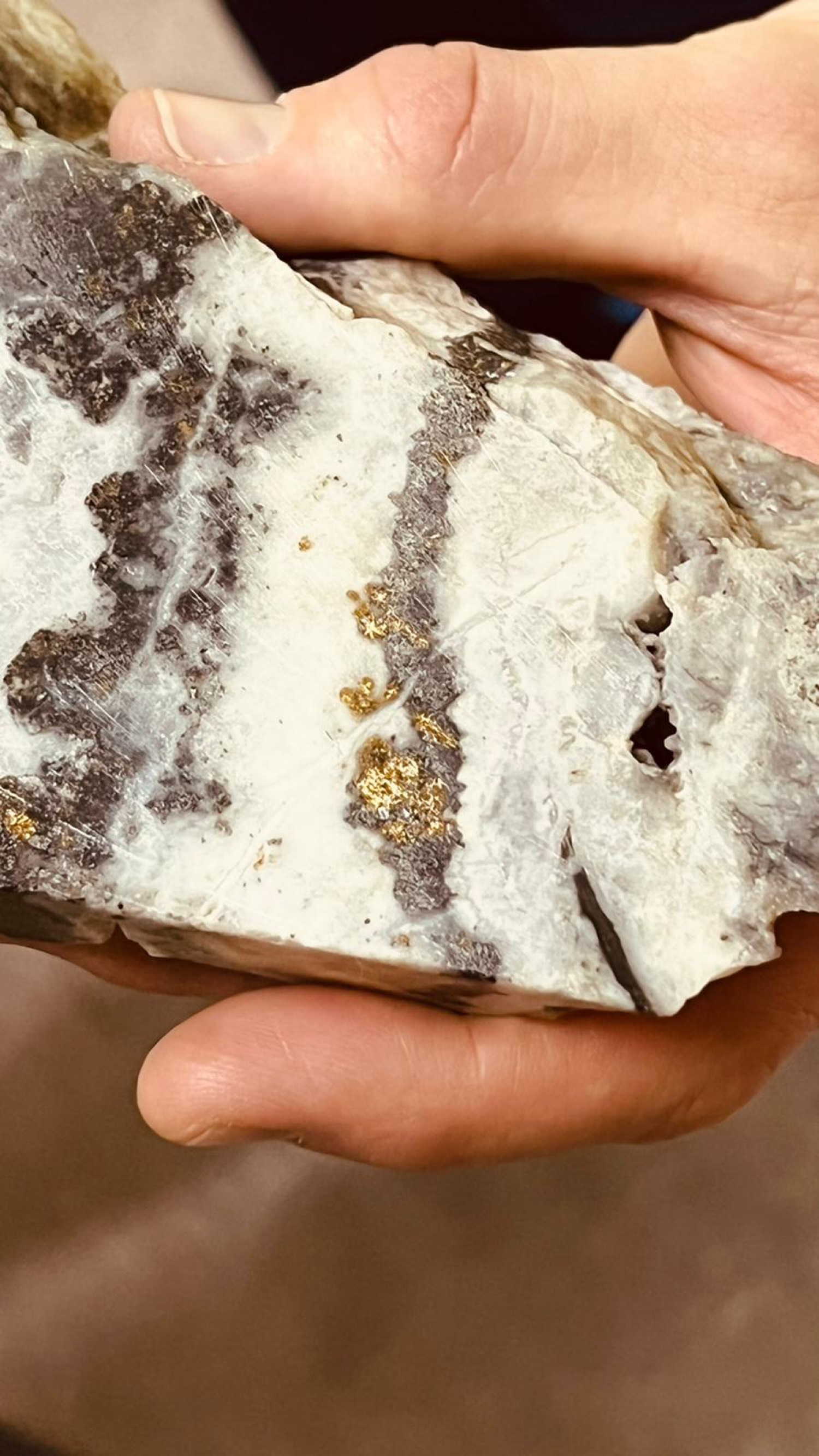
On August 27, Brightstar gave it one. The company reported drilling results from the Two Mile Hill-Shillington deposit within its Sandstone project: 225.7 metres at 3.11 grams per tonne gold, including 19 metres at 24.3g/t; a second intercept of 194 metres at 2.10g/t, including 13 metres at 4.35g/t; and individual assays running as high as 449 grams per tonne, with visible gold logged throughout alongside galena and pyrite. A new "Shirvington Zone" turned up broader mineralisation than the existing model had assumed. Managing Director Alex Rovira called the results evidence of "the broad widths of the Two Mile Hill deposit and high-grade nature of the quartz veining," framing them as support for a future underground mining operation.
Sector beta gets a stock moving. A 225-metre intercept at 3.11 grams a tonne, with a 24-gram core inside it, is what convinces you the move wasn't a mistake.
The bigger picture is a resource base that's been compounding for years, not weeks. Sandstone's Mineral Resource was upgraded to 2.9Moz in July — an 18% lift, built on tighter geological controls and Brightstar's own estimation parameters applied across deposits for the first time — and the group total, spanning Sandstone and the Goldfields camp, has grown from 0.5Moz in mid-2022 to 4.5Moz as of July 2026. The current Two Mile Hill Mineral Resource Estimate sits at 14.6 million tonnes at 1.6g/t for 731,000 ounces, and infill drilling is aimed at upgrading it to Indicated classification ahead of an updated MRE and pre-feasibility study slated for November. Meanwhile the 1.5Mtpa Goldfields processing plant is under construction and, per the company, ahead of schedule, targeting first gold in June 2027.
The Take (conviction 3/5). We're inclined to believe this one, and the reason is sequencing: the resource growth and the construction timeline were already in motion before the rally started, which means the August share-price move is catching up to an existing story rather than inventing one. Two analysts covering the stock have it at Strong Buy with a 12-month target near $1.97 — call that context, not gospel, the way we'd treat any single-digit sample of sell-side coverage. The company posted a $61.8 million loss on the way here, which is normal for a developer mid-build and not in itself a red flag, but it's the number that should keep anyone chasing this at $0.54 honest about what they're actually buying: a construction-and-drilling story, not a cash-flow one. On price-to-sales, Brightstar screens rich against its immediate peer group (around 6.7x versus a 4.5x average) even as it screens cheap against the broader Australian metals-and-mining sector and against a discounted-cash-flow estimate north of $2. Both of those things can be true at once. The plant gets built or it doesn't; November's PFS either confirms the grade or it doesn't. Until then, the stock is pricing in a lot of "and then it worked."