
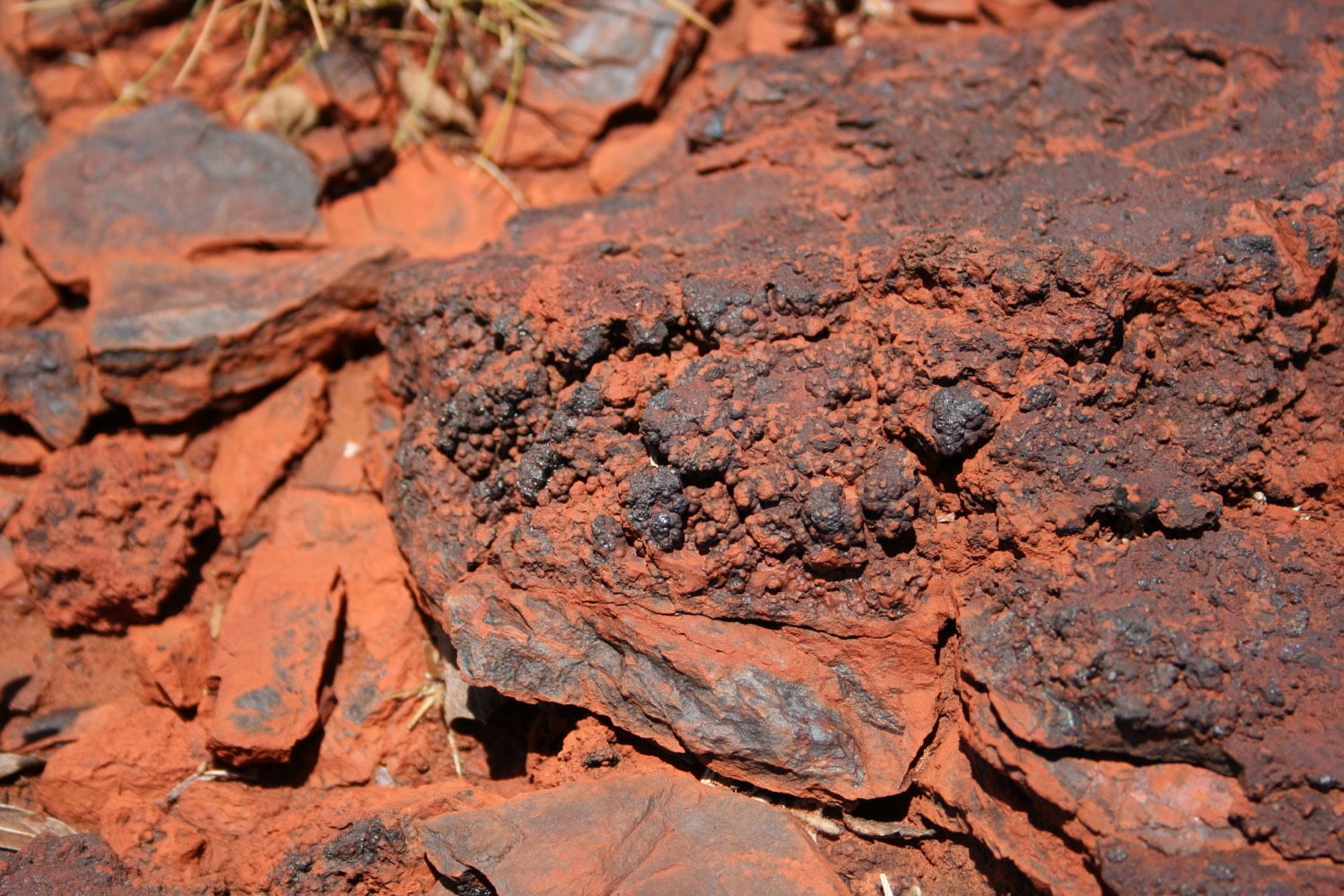
The quality trade in iron ore has had plenty of believers and almost no pure-play producers. That gap is about to close. Champion Iron (ASX/TSX: CIA) says its Direct Reduction Pellet Feed (DRPF) project at Bloom Lake in Québec completed initial production tests in March 2026, with first sellable commercial product expected by the end of calendar Q2 2026 — that's this month. The project upgrades up to half of Bloom Lake's capacity to a DR-quality pellet feed grading up to 69% Fe, among the highest grades shipped from any mine on earth.
Start with the base business, because the thesis only works if the operator can run a mine. Bloom Lake is an open-pit complex with two concentration plants on largely hydroelectric power and a combined nameplate of 15M wmt/yr, producing a high-grade 66.2% Fe concentrate with a proven ability to make 67.5% Fe DR-quality material. In its fiscal Q4 (ended 31 March 2026), Champion produced 3.4M wmt — up 8% year over year — booked revenue of $414.5M and EBITDA of $114.3M, and lifted its Fe recovery rate to 80.6% from 78.3%. C1 cash cost ran near $60.5/dmt, up on semi-annual plant maintenance. Available liquidity sat at $812.4M. This is a mid-cost, high-grade operation that just spent seven years on a capital build and is now exiting the tunnel.
The structural case is simple: you cannot make low-carbon steel from low-grade ore. The DRI route needs the clean stuff, and the clean stuff is scarce.
Here's the discipline part. The premium for high grade is cyclical today and structural tomorrow, and you have to hold both ideas at once. Fastmarkets prices DR pellet premiums over its 65% Fe Brazil-origin fines index, and right now the spread is soft — weak Chinese steel margins and poor DR-pellet consumption are expected to drag into the first half of 2026. Champion's own products have historically attracted a premium to the P62 index, but premiums sit near the low end of their range. In our view that's the opportunity, not the obituary: the same IIMA estimates cited by Fastmarkets put merchant DR-grade pellet demand at 58.5Mt in 2026, up from ~47Mt in 2022, as DRI capacity gets built outside the Middle East. Demand curve up, scarce supply — that's a premium that widens with time, not headlines.
The peers tell you the supply side is hard. Fortescue ($FMG)'s Iron Bridge magnetite project, its bid for the high-grade segment, pushed full production out to 2028 — magnetite beneficiation humbles even well-capitalised majors. Vale ($VALE) is attacking the same demand from the agglomerate side, testing "green briquette" DR products and pursuing Middle East mega-hubs to feed low-carbon steelmaking. New high-grade tonnes are slow, expensive and few. Champion is one of the only names converting existing capacity to DR-grade now rather than promising it for next decade.
Around the core, Champion is building optionality: it closed the US$300M acquisition of Norway's Rana Gruber (~1.8M dmt/yr) in April 2026, and holds 51% of the Kami project alongside Nippon Steel and Sojitz, with a feasibility study targeted for H2 2026. CEO David Cataford framed the strategy plainly, saying the company is positioning itself "to capitalize on the anticipated growth in demand for high-purity iron ore."
The Long Game read: buy the producer that's actually moving up the grade curve while the premium is cheap, and let steel decarbonisation do the rest. Just don't confuse "structural" with "imminent" — this one pays patient holders.