
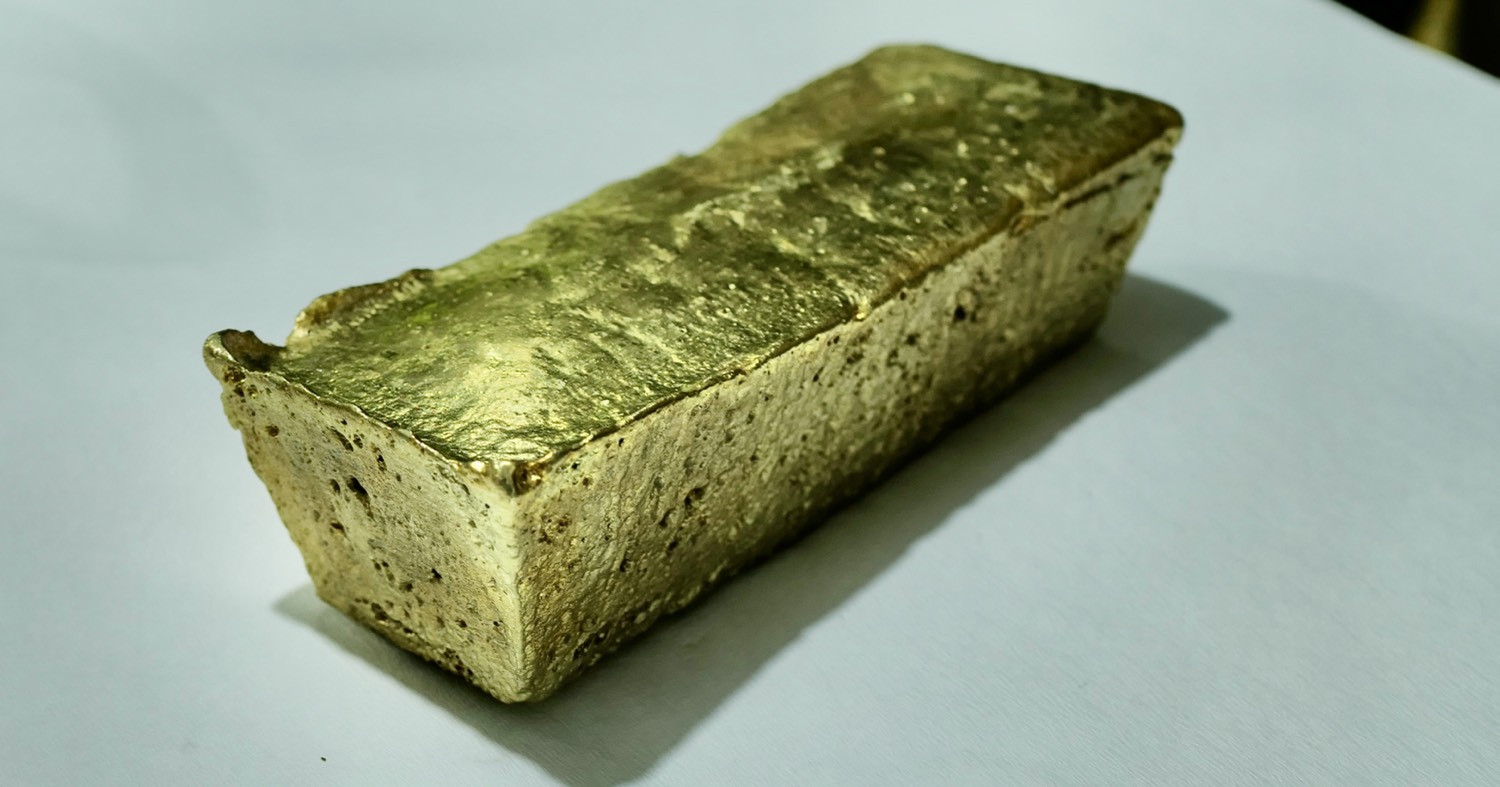
Gold's spot price sat near $4,335.79/oz on the morning of September 2, per CNBC's tracker, a touch below Tuesday's $4,350. The day before, USAGOLD had it down $71 (-1.6%) to a two-week low as Treasury yields jumped and traders rebuilt bets on a September Fed hike. That's the story in one line: the metal is being yanked around by a rate narrative that changes with every data print and every sentence out of the chairman's mouth.
The market can't decide whether the Fed's next move is a hike or a hold. Gold is trading the argument, not the answer.
Here's the mechanism, plainly. Gold pays no coupon, so its enemy is the real yield — the return you forgo to hold it. When yields and the dollar rise, the opportunity cost of a zero-yield brick goes up and gold falls; when they fall, gold catches a bid. Right now both engines are firing in opposite directions.
On the hawkish side: the Fed held rates 9-3 at 3.50%–3.75% on July 29 — a fifth straight hold — but three regional presidents dissented, wanting to raise to fight inflation still running above target. Chair Kevin Warsh, who called inflation "a choice," has pushed the Fed to stop pre-committing; in the meeting recap he shrugged at the split with "I asked for a good family fight, and I got one." His Jackson Hole turn then swung September into a coin flip, with CME-implied hike odds spiking near 56% before cooling back toward the 30s. Renewed US–Iran strikes and a bounce in oil are now nudging those hike bets back up.
On the dovish side: July payrolls fell 23,000 against an +83k consensus, with wage growth cooling to 3.2%, the softest since 2021. And July CPI landed at 3.4% headline, 2.5% core — hot versus the 2% target, but easing as the energy shock fades. A slowing jobs market argues against hikes; sticky prices argue for them. Gold is stuck in the crossfire until the September 16 decision and fresh dot plot.
The structural offset is real. The World Gold Council pegged Q2 official-sector buying at 289 tonnes, the strongest second quarter on record — reserve managers added into the price dip even as gold ETFs shed 45t on the stronger dollar and higher rate expectations. Central banks are the patient bid beneath a jumpy tape.
Who it matters for. This is where the noise turns into cash. Barrick ($B) (B) ran Q2 AISC of $1,866/oz; at ~$4,340 spot that's roughly a $2,470/oz margin per ounce sold — pure operating leverage. Newmont ($NEM) (NEM) posted Q2 adjusted EPS of $2.10 and a second-quarter-record $2.2bn of free cash flow, holding 2026 guidance at 5.3Moz. Agnico Eagle (AEM) is the low-cost darling, guiding AISC of $1,400–$1,550/oz — a near-$2,850/oz margin — and posting record cash flow. Down under, a weak Aussie dollar juices the spread: Evolution Mining (EVN) delivered FY2026 AISC of A$1,717/oz and A$3.39bn of mine cash flow, while Northern Star (NST) — despite two production downgrades this year — still earns fat margins against A$4,900 gold.
The Take (conviction 4/5): the rate path is genuinely unknowable — Warsh has made sure of that. But you don't need to win the macro bet to win here. At $4,300+ gold, the low-AISC names throw off cash whether the September dot is a hike or a hold. We'd rather own Agnico's and Evolution's cost curves than trade Warsh's next sentence.