
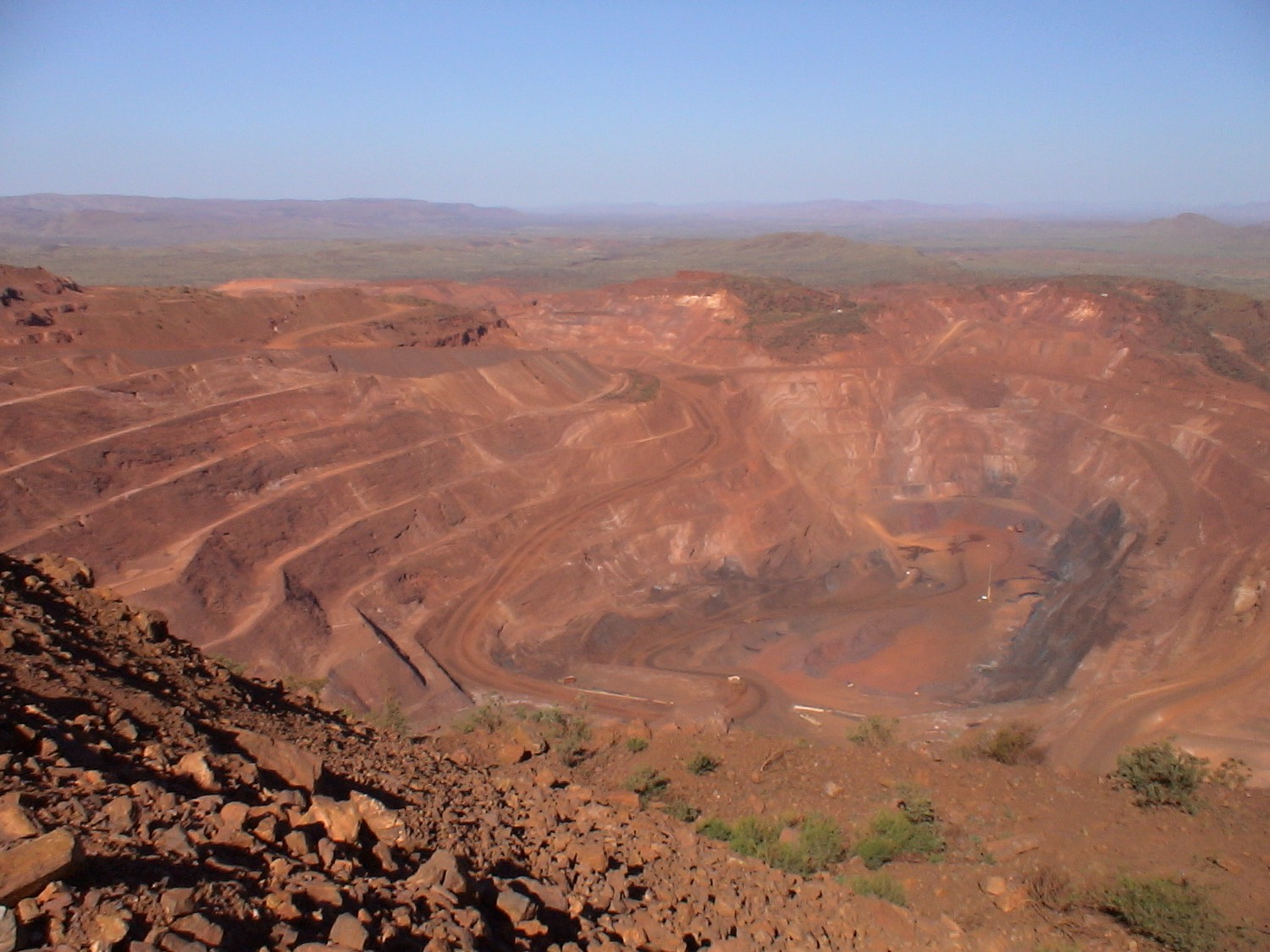
Start with the verifiable event. Today Macarthur Minerals ($MIO) (ASX:MIO, TSX-V:MMS) told the market it has a second Programme of Work approval in hand. Macarthur Minerals has received an additional Programme of Work approval for proposed bulk sampling at its Lake Giles Hematite Project in Western Australia; the program is designed to support further assessment of product quality, processing options and potential blending opportunities, covering additional areas of the project, with Destec progressing planning for the proposed bulk sampling program and mobilisation of mining equipment and a mobile crushing plant. The permit came from WA's Department of Mines, Petroleum and Exploration — the DMPE, which from 1 July 2025 replaced the Department of Energy, Mines, Industry Regulation and Safety (DEMIRS).
It complements the first PoW. In April 2026 Macarthur secured a Program of Work approval from WA's mines regulator for tenements M30/249 and M30/213, allowing bulk sampling and site works, with the program facilitating bulk sampling of hematite and magnetite, validation of hematite product quality and assessment of blending opportunities with ore from Gold Valley Yilgarn's Wiluna West project. The new grant extends that into the Central region. Destec has been reviewing block models for the Snark, Drabble Downs, and Central Regions, pinpointing key areas for the bulk sampling.
The Take
Read the fine print, because Macarthur did. The PoW approval does not indicate the start of mining operations, nor does it confirm economic viability, production, cashflow, or represent a final investment or development approval. In our view that disclaimer is the whole story: this is a paperwork milestone, not a shipment. The one line worth circling is the mobile crusher — kit moving to site is closer to a real DSO trial than another approval PDF.
Permits are free. Product specs and tonnes on a truck are not. Watch for the second thing.
Here's the cost-curve reality. MIO is a micro-cap — market cap around A$8.9M, with shares languishing near three cents. Its resource is real but split awkwardly: the Ularring hematite resource of 54.5 million tonnes at 47.2% Fe Indicated and 26 million tonnes at 45.4% Fe Inferred, plus the Lake Giles magnetite resource of 53.9Mt Measured, 218.7Mt Indicated and 997Mt Inferred, with Proven Ore Reserves of 51.9Mt and Probable Ore Reserves of 184.7Mt. The magnetite is the long-dated prize; the hematite is the near-term cash idea, at grades that print as a mid-40s%-Fe DSO — below the 62% benchmark, so it lives or dies on discount, freight to Esperance, and blending. That's exactly why the Wiluna West blend line matters. The commercial machinery sits with partners: Gold Valley Yilgarn and Destec Contracting each hold a 50% stake in Gold Valley's interest under the Principal Agreement, after a 4 June 2026 Deed of Assignment, while Macarthur and its subsidiary remain the legal and beneficial owners of the tenements.
Where it sits in the field
Context sharpens the stake. The Yilgarn iron-ore field has thinned out. Mineral Resources ($MIN) (ASX:MIN) announced the closure of its Yilgarn iron ore hub, impacting about 1,000 jobs in 2024 — high-cost tonnes exiting when the 62% price won't carry the rail-and-port bill. Further afield, Mount Gibson Iron (ASX:MGX) moved to close its Koolan Island mine after a rockfall, cutting around 450 jobs in late 2025. The counter-example is disciplined growth: Fenix Resources (ASX:FEX) secured approval for its Beebyn-W10 iron ore mine in WA this July, a Mid West operator building around freight it controls.
That's the frame for Macarthur. A junior trying to slip a low-capex DSO hematite product out ahead of any magnetite build, into a district where bigger names have walked away from marginal tonnes. The second PoW keeps the option alive. It doesn't yet prove the ore can travel to Esperance and clear a margin. We'll judge this one on the assay sheet and the shipped tonne — not the approval.