
Most weeks we're writing about companies with market caps in the hundreds of millions and mills that already run. This week's watchlist name has a market cap of roughly $10.4 million, a share price around 9.1 cents, and no resource statement at all. We're covering it anyway, because the geology behind it is more interesting than the size of the company, and because it's doing two things at once that don't usually go together this early: chasing an actual gold system with independent third-party backing, and stumbling into a critical-minerals discovery that's arguably the better story.
Right Resources ($RRE) (ASX:RRE) listed on the ASX in October 2025 out of West Perth, and its flagship is the Pilot Project at Tumbarumba, NSW — ground with a history of high-grade underground gold production averaging around 38 grams per tonne, worked long before anyone had a name for the geological model behind it. The company's current pitch is that Pilot sits within a Reduced Intrusion-Related Gold System, or RIRGS — a style where gold rides in with a specific kind of reduced granitic intrusion, rather than the more familiar orogenic vein systems that dominate places like Kalgoorlie. That's not a marketing label; it's a testable geological hypothesis, and Right Resources went and got it tested. CODES, the economic-geology research centre at the University of Tasmania, independently reviewed the project's geochemical, fluid-inclusion and structural data and confirmed it's consistent with the RIRGS framework — the kind of third-party sign-off that costs a junior nothing to boast about and everything to fake.
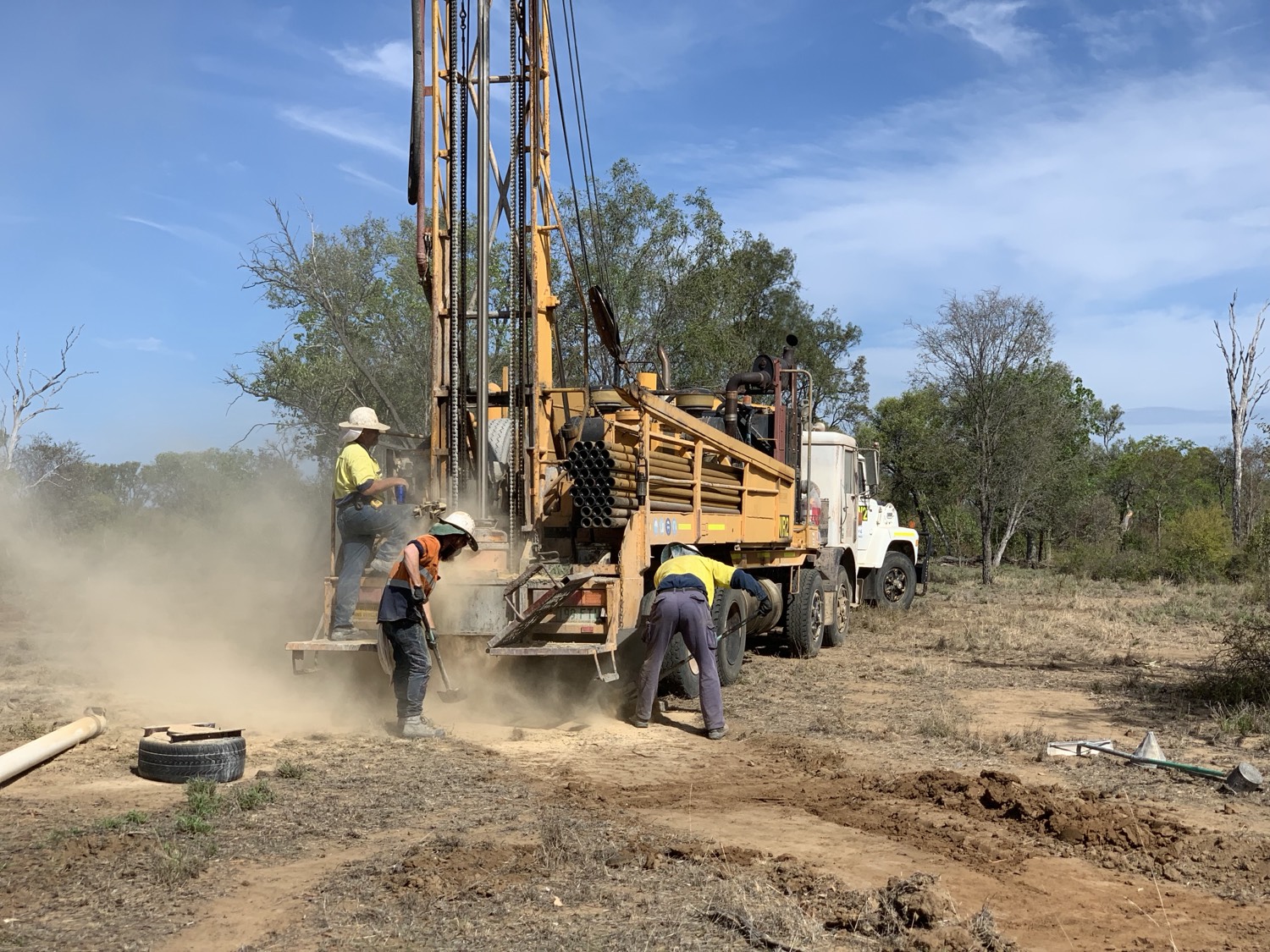
The maiden diamond program — 4,800 metres — intersected sheeted veins and stockwork zones, including a broad 42-metre interval at 0.2g/t gold, and a re-assay of hole RRPT0001 using PhotonAssay (a bulk-sample technique that reads more gold than conventional fire assay in coarse or nuggety systems) tightened the picture to 16 metres at 0.35g/t and 7 metres at 0.48g/t. Read those numbers for what they are: distal-zone grades. Under the RIRGS model, Right Resources' own framing is that current drilling is testing the edges of the system, using metal zonation to vector toward a higher-grade core closer to the intrusion. That's either a sensible technical read of genuinely early data, or the most convenient possible interpretation of underwhelming numbers — we can't tell you which yet, and neither can they. A further ~600-metre diamond program is slated for Q4 2026, which is the point at which this stops being a model and starts being a number.
A distal assay and a management team telling you the good stuff is closer to the middle isn't a discovery. It's a thesis with a drill date attached.
Here's the twist. In May, fieldwork at the Blue Prospect — inside the Green Hills State Forest, part of the same tenement package — turned up a coherent 2.1km-by-1.8km tungsten-bismuth-molybdenum soil anomaly, open in every direction, with rock chips as high as 34,600ppm tungsten (4.3% WO3) and multiple confirmed tungsten minerals (scheelite, wolframite, tungstite, meymacite, stolzite) in a sheeted quartz-vein system. We've written before, in our rare-earth piece, about the gap between "critical" and "actually scarce" — most rare earths are common in the crust, and what's rare is the processing capacity. Tungsten is a genuinely different case: China controls roughly 85% of global supply, both Australia and the US classify it as critical, and it goes straight into defence applications like armour-penetrating munitions. A soil anomaly two kilometres across, still open, sitting on ground a gold explorer found almost by accident, is the kind of asymmetric discovery that's easy to overweight and hard to ignore.
Right Resources is funding the next leg with a $2.7 million placement at 9c completed in July, cornerstoned by existing major shareholders with directors chipping in $300,000 of it themselves — about 11% of the raise, which is a meaningfully large insider commitment for a company this size — plus a shareholder purchase plan for up to $1 million more. The money is earmarked for roughly 3,000 metres of aircore and RC drilling at Blue in the September quarter and the 600-metre diamond program at Pilot in the December quarter. Managing Director Graham Howard framed shareholder support as recognition of "the opportunity to fund what they believe could become Australia's next major metallogenic province" — big talk for a $10 million company, and the kind of line we'd normally discount hard. We're not fully discounting it here, because the CODES involvement and the director skin-in-the-game are real, verifiable facts sitting underneath the rhetoric.
The Take (conviction 2/5). This earns a spot on the watchlist, not in the portfolio. Everything that makes Right Resources interesting — the RIRGS model, the tungsten anomaly, the independent geological backing — is also everything that makes it unproven: no JORC resource at either prospect, distal-zone drill results at Pilot, and a soil anomaly at Blue that hasn't seen a drill rig yet. What tips it from "another microcap gold story" to "one to watch" is the combination of a legitimate academic sign-off and directors funding the next drill campaign with their own cash rather than just other people's. Q3 and Q4 2026 assays at Blue and Pilot are the actual catalysts here — watch those, not the ticker.